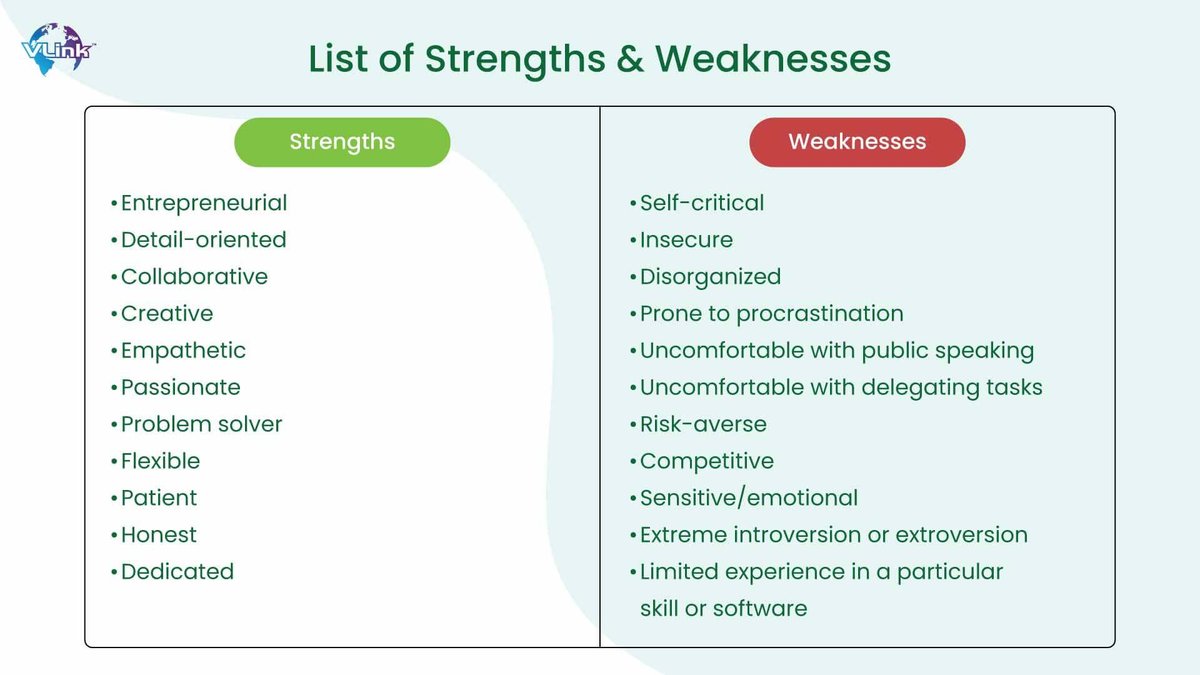
Few questions in a job interview send a shiver down the spine quite like "What are your strengths and weaknesses?" or "Tell me about a time you faced criticism." These aren't just standard interview fare; they're pivotal moments where you can demonstrate profound self-awareness, a growth mindset, and your strategic fit within a potential team. Handled poorly, they can derail your candidacy. Handled brilliantly, they can seal the deal.
This isn't about reciting rehearsed clichés. It's about authentic self-reflection, strategic communication, and showing that you're not just capable, but also teachable and genuinely invested in continuous improvement. Let's peel back the layers and equip you to ace these critical questions.
At a Glance: Your Winning Strategy
- Self-Awareness is Key: Employers want to see that you truly understand yourself – your capabilities and your areas for growth.
- Align with the Role: Your strengths should directly relate to the job's demands; your weaknesses should not be critical to the role.
- Focus on Hard Skills for Weaknesses: Never name personality traits or essential soft skills as weaknesses. Stick to specific, improvable skills.
- Show, Don't Just Tell: Always back up your statements with concise, impactful examples. The STAR method is your friend.
- Demonstrate Growth: For weaknesses, highlight your active steps toward improvement and what you've learned.
- Concise & Confident: Keep your answers under 60 seconds each. Practice until they sound natural, not robotic.
- Prepare and Tailor: Generic answers fall flat. Customize your responses for every interview.
Why Do Employers Ask About Your Strengths, Weaknesses & Criticisms? It's More Than Just a Test
Many job seekers view these questions as a trap, designed to trip them up or force an admission of inadequacy. In reality, savvy hiring managers ask about your strengths, weaknesses & criticisms for far more strategic reasons than you might imagine. They're looking to gauge:
- Your Self-Awareness: Do you genuinely understand your capabilities and limitations? A lack of self-awareness can hinder personal growth and team collaboration.
- How You Leverage Strengths: It’s not just about having skills, but knowing how to apply them effectively to contribute to business goals and solve problems.
- Your Growth Mindset: Can you admit shortcomings? More importantly, are you proactive in addressing them? This indicates maturity and a commitment to continuous improvement.
- Team Balance & Cultural Fit: How do your strengths complement the existing team? Will your areas for development create undue burden or open opportunities for mentorship? Your ability to handle feedback (criticism) is also a massive indicator of how you'll integrate into a team culture.
- Problem-Solving & Resilience: How do you approach challenges, whether they're skill gaps or difficult feedback? Do you learn from them and adapt?
Think of it less as an interrogation and more as an opportunity to showcase your professional maturity and potential.
Unpacking Your Strengths: More Than Just Bragging Rights
When an interviewer asks about your strengths, they're handing you a golden ticket to illustrate how you'll add value. This isn't a moment for false modesty; it's a chance to shine, but strategically.
Focus Your Fire: Aligning Strengths with the Role
The cardinal rule here is relevance. Don't just list every positive attribute you possess. Instead, meticulously review the job description, company mission, and even recent news about the organization. What are the key skills they're asking for? What problems do they need solved?
Your Goal: Highlight strengths that directly align with the job's requirements, the company culture, and their business objectives. If the role demands strong analytical skills, lead with "Data Analysis in Excel" before mentioning "Enthusiasm."
The Art of Prioritization: Hard Skills First, Soft Skills Second
If asked for "a strength" or "your top three strengths," consider leading with hard skills—those quantifiable, job-specific talents that immediately demonstrate your capability.
- Hard Skills Examples: Ruby on Rails development, Email marketing strategy, Data Analysis in Excel, specific software proficiency, development languages. These are tangible and often directly address a job requirement.
- Soft Skills Examples: Communication skills, Problem-solving, Leadership skills, Being a team player, Critical thinking, Empathetic. While crucial, these often get more weight when supported by how they enhance your hard skills.
A good approach is to integrate them. For example: "My strong Data Analysis skills in Excel (hard skill) allow me to present complex information clearly and concisely (communication – soft skill), which has significantly improved our team's decision-making."
The STAR Method for Strengths: Your Storytelling Framework
To make your strength assertions credible and memorable, use a condensed version of the STAR method (Situation, Task, Action, Result).
- State Your Strength: Clearly and concisely name the strength.
- Provide a Brief Example: Describe a specific instance where you successfully applied this strength in a professional setting. Keep it short and to the point.
- Summarize the Positive Impact/Measurable Results: What was the outcome? How did your strength benefit the team, project, or company? Quantify if possible.
Example in Action:
- Strength: "One of my core strengths is my ability to develop efficient Ruby on Rails applications."
- Example: "In my previous role at TechCo, we had a legacy internal tool that was incredibly slow and prone to errors. I took the initiative to rewrite it using Ruby on Rails, streamlining the codebase and optimizing database queries."
- Impact: "This resulted in a 40% reduction in processing time and eliminated 90% of user-reported bugs, significantly improving team productivity and data accuracy."
This structured approach transforms a simple claim into compelling evidence of your capabilities.
Powerful Strengths to Consider (and Tailor!)
- Ruby on Rails development
- Email marketing strategy
- Data Analysis in Excel
- Communication skills (especially presenting complex info)
- Problem-solving
- Project management
- Troubleshooting complex systems
- Being a team player (with an example of specific contribution)
- Critical thinking
- Self-criticism/analysis for improvement
- Strong work ethic (with a specific outcome)
- Deadline-oriented (e.g., "Never missing a deadline, even under pressure")
- Collaborative
- Creative (demonstrate with an innovative solution)
- Proactive / Self-starter
Remember, practice delivering these answers succinctly, aiming for under 60 seconds per strength.
Tackling Weaknesses: The Art of Strategic Vulnerability
This is where many candidates falter, either by offering a cliché ("I work too hard!") or by revealing a critical flaw. The key is to demonstrate self-awareness and a proactive approach to growth, without undermining your suitability for the role.
The Golden Rule: Skill-Based, Not Personality-Based
This is perhaps the most critical distinction. Never name a personality trait or a core soft skill that is essential for the job as a weakness.
- Good: "I'm actively working on my proficiency with pivot tables in Excel." (Specific, improvable hard skill)
- Bad: "My communication skills are lacking." (Essential soft skill, casts doubt on your ability to perform)
- Bad: "I'm not very detail-oriented." (Potentially critical for many roles, shows lack of awareness)
- Awful: "I get impatient with slow colleagues." (Personality flaw, reflects poorly on teamwork)
Stick to hard skills or specific, non-critical skill gaps.
Choose a Weakness That Isn't a Dealbreaker
Select an area for improvement that is not a core requirement for the immediate job role you're applying for. If the job demands daily public speaking, "I'm uncomfortable with public speaking" is a red flag. If it's an occasional task, it might be acceptable if paired with a strong improvement plan.
The Growth Mindset: Show, Don't Just Tell, Your Improvement
The power in discussing a weakness lies not in the weakness itself, but in what you are actively doing to overcome it. This demonstrates maturity, resilience, and a commitment to professional development.
Structure Your Answer:
- State the Specific Skill-Based Weakness: Be direct but strategic.
- Describe Your Efforts Towards Improvement: What steps are you taking? (e.g., taking a course, seeking feedback, practicing specific tasks, reading books, volunteering for related projects).
- Mention Any Positive Outcomes or Your Willingness to Develop It into a Strength: How has this process already benefited you, or what do you hope to achieve?
Example in Action:
- Weakness: "In my previous role, I recognized I needed to improve my skills in a specific programming language, Python, as many new projects were beginning to incorporate it."
- Efforts: "I've since enrolled in an online Python certification course, dedicated several hours each week to practical exercises, and even started a small personal project to apply what I'm learning."
- Outcome: "I'm now much more comfortable with the fundamentals and can contribute to basic Python tasks, and I'm eager to continue developing this skill, especially if it aligns with the team's future needs here."
This approach clearly shows initiative and a proactive attitude.
Quantity Control: Less is Often More
If asked for "three weaknesses," it's perfectly acceptable to share one or two well-articulated weaknesses. Dwelling on too many negatives can shift the interview's tone unnecessarily. Your focus should be on growth, not an exhaustive list of shortcomings.
Weaknesses to Avoid (and Smart Alternatives)
Avoid:
- "I work too hard" / "I'm a perfectionist" (Sounds like a disguised strength, lacks self-awareness).
- Weaknesses that are essential job requirements (e.g., "I'm bad at sales" for a sales job).
- Personality traits (e.g., "I'm disorganized," "I'm impatient").
- Anything that suggests a negative attitude or lack of team spirit.
Examples of Acceptable (Skill-Based, Non-Critical) Weaknesses: - Proficiency in a non-core piece of software you're just learning.
- A specific programming language you're actively learning (if not foundational for the role).
- A sales or marketing skill like cold calling (if the role is more about nurturing leads).
- A specific leadership skill like formal training/mentoring (if you're a junior candidate or it's not a primary duty).
- Becoming more comfortable with public speaking or leading large meetings (if the role primarily involves smaller team interactions).
- Delegating tasks effectively (if you tend to prefer doing everything yourself, but are learning to trust your team).
Handling "Criticisms": Embracing Feedback for Growth
The "criticisms" part of the question often extends beyond personal flaws to how you receive and act on feedback. This demonstrates your coachability, humility, and commitment to continuous improvement – qualities highly valued in any workplace.
Why They Ask About Criticism
Interviewers want to understand if you:
- Can differentiate between constructive feedback and personal attack.
- Are open to learning from others.
- Can take responsibility and not get defensive.
- Are proactive in implementing changes based on feedback.
Your Strategy for Discussing Criticism
- Choose a Genuine Instance: Don't invent a scenario. Think of a time you received specific, constructive criticism about your work or approach.
- Focus on the Learning: The criticism itself isn't the point; what you did with it is.
- State the Situation & the Criticism: Briefly describe the context and the feedback you received.
- Explain Your Initial Reaction (Briefly) & How You Processed It: Did you reflect? Ask clarifying questions?
- Detail the Actions You Took: What specific steps did you implement to address the feedback?
- Highlight the Positive Outcome/Lesson Learned: How did you improve, and what positive impact did it have?
Example in Action:
- Situation/Criticism: "Early in my career as a junior designer, my manager gave me feedback that I sometimes got too deeply immersed in the creative details of a project and didn't always check in frequently enough on client expectations for overall project scope and timeline."
- Processing: "Initially, I was a bit surprised because I thought my dedication to detail was a strength. However, I recognized the validity of his point – my focus on perfection could sometimes impact project momentum and client communication."
- Actions: "I made a conscious effort to schedule more frequent, brief check-ins with clients and stakeholders at key milestones, even if a design wasn't 'perfected.' I also started using a project management tool more diligently to track progress against the broader timeline."
- Outcome/Lesson: "This dramatically improved client satisfaction and reduced last-minute revisions, as I was incorporating feedback earlier and ensuring alignment throughout the process. It taught me the crucial balance between creative excellence and practical project management, and that proactive communication is key to managing expectations."
This response shows vulnerability, reflection, and proactive problem-solving – all highly desirable traits.
Common Pitfalls to Avoid (and How to Sidestep Them)
Even with good intentions, it's easy to stumble. Here are some common traps and how to avoid them:
- Being Generic: "I'm a good communicator." Anyone can say that. Show it with an example. "My communication skills are strong, evidenced by my successful negotiation of complex vendor contracts that saved the company 15%."
- Sounding Arrogant: While you should be confident about your strengths, avoid sounding boastful. Focus on contributions and impact, not just self-praise.
- Being Too Negative: Don't dwell excessively on your weaknesses or past failures. Acknowledge, explain improvement, and move on. The goal is growth, not self-deprecation.
- Lacking Specificity: Abstract answers like "I'm a quick learner" are less impactful than "I quickly mastered Salesforce administration in my last role, allowing me to train new team members within two weeks."
- Blaming Others: When discussing criticism, never shift blame. Take ownership of your role in the situation and focus on your actions to improve.
- No Improvement Plan for Weaknesses: Simply stating a weakness without outlining what you're doing to improve is a major red flag. It suggests a lack of initiative.
The Strategic Edge: Tailoring Your Responses & Proactive Questions
Your answers to strengths, weaknesses & criticisms should never be one-size-fits-all. Each job, company, and team is unique.
Tailoring is Non-Negotiable
Before every interview, review the job description, research the company culture, and even look up the interviewer's background if possible.
- Job Description: What are the absolute must-have skills? Emphasize these as strengths. Which skills are secondary or 'nice-to-haves'? Consider making one of these your developmental weakness if appropriate.
- Company Culture: Is it fast-paced? Collaborative? Innovative? Frame your strengths to fit this ethos. If they value innovation, highlight your problem-solving skills with a creative solution.
- Team Dynamics: If you can glean insights into the team, tailor your answers to complement them. For instance, if it's a new team, strong leadership or training skills might be particularly valuable.
Pro Tip: Write down 2-3 tailored strengths and 1-2 tailored weaknesses for each interview. Practice them aloud.
Turning the Tables: Proactive Questioning
After you've thoughtfully answered, consider asking the interviewer a strategic question. This shows engagement, critical thinking, and a genuine interest in the role and team.
- "You've asked me about my strengths and areas for development. What do you feel are the team’s greatest strengths and perhaps its biggest challenges or areas where new talent could really make an impact right now?"
- "What is something that you’re hoping a new person can bring to the team to enhance its capabilities or address a current need?"
These questions not only demonstrate your interest but also give you valuable insights into the team's dynamics and what they truly seek in a new hire. It's a great way to learn more about where your specific talents could be most impactful, much like understanding the nuanced reviews that help shape perspectives, as seen with The Sonic X Shadow Generations review which offers varied viewpoints on a complex topic.
Putting It All Together: Practice Makes Polished
You now have the frameworks, the examples, and the strategic mindset to approach questions about your strengths, weaknesses, and criticisms with confidence. But knowledge alone isn't enough – practice is paramount.
- Rehearse Aloud: Don't just think your answers; say them out loud. This helps you identify awkward phrasing, improve your flow, and time your responses.
- Record Yourself: Video yourself practicing. It might feel uncomfortable, but watching yourself back can reveal non-verbal cues, filler words, or areas where you could be more articulate.
- Mock Interviews: Ask a trusted friend, mentor, or career coach to conduct mock interviews. Their feedback will be invaluable.
- Anticipate Follow-ups: For each strength, weakness, or criticism you prepare, think about a potential follow-up question the interviewer might ask. "Can you tell me more about that project?" or "How did that experience change your approach going forward?"
Approaching these questions with preparation and a genuine desire to showcase your best self, while also demonstrating a commitment to growth, will set you apart. You're not just getting through the interview; you're leveraging it to show your true professional caliber.